📣 Register Now for ADDS Atlanta 2026  |  February 23-25  |  Atlanta, GA

THERAPEUTIC EXPERTISE

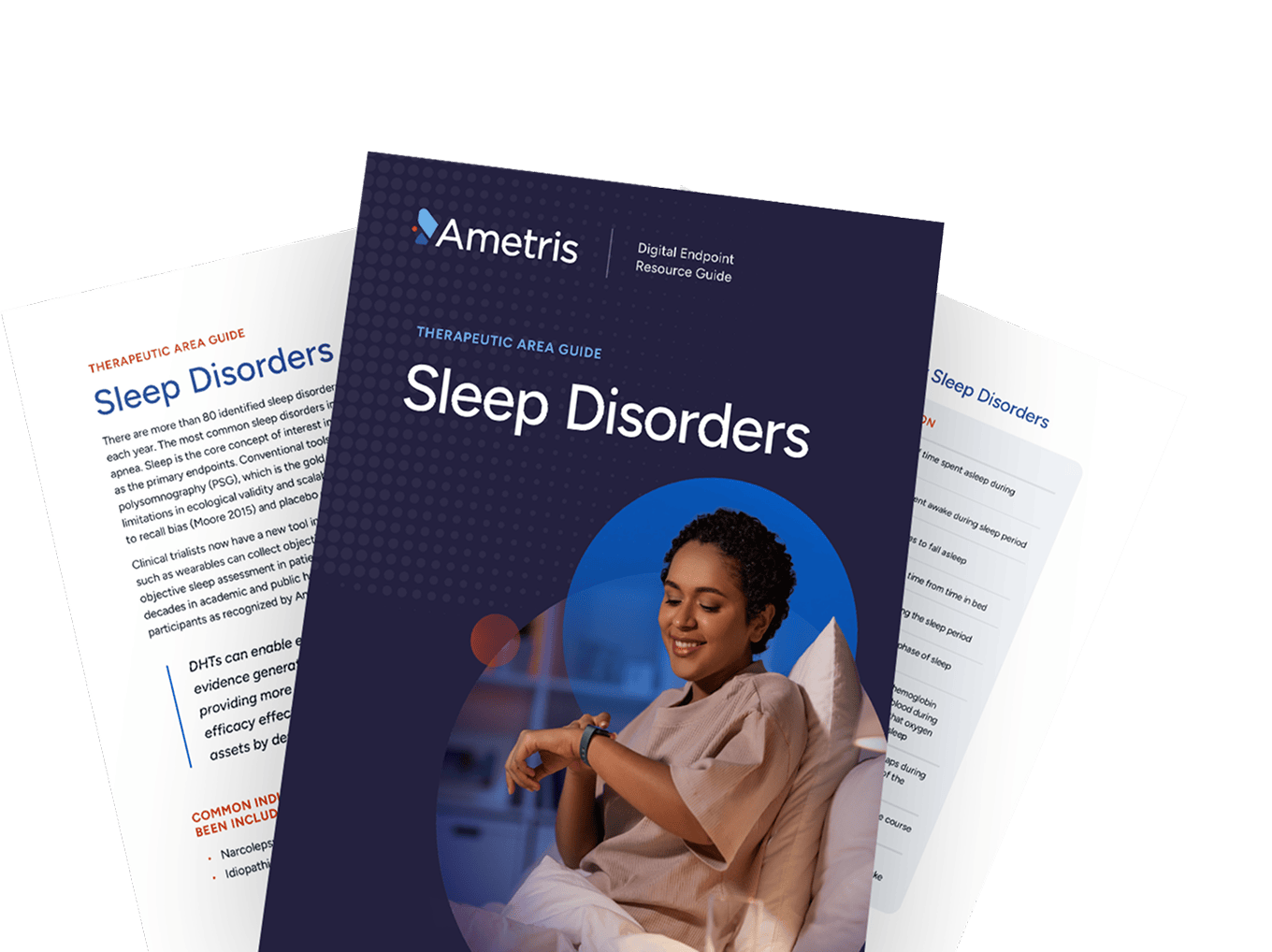
Solutions for Sleep Disorder Research 

Disrupted sleep patterns and quality are characteristic of sleep disorders, and impact other areas of patient well-being, including their physical functioning. Wearable DHTs can detect unique functional changes associated with sleep disorders and changes associated with treatment interventions, providing quantifiable measures of participant behavior that is otherwise difficult to obtain.

Schedule a Meeting Download Case Study


gfx1-Dec-08-2025-06-28-13-7701-PM

Opportunities with DHTs

  • Passive, remote, low-burden data collection
  • Continuous, rich data sets
  • Long-term, objective and ecologically valid data collection
  • Complement PRO-based evidence and in-clinic assessments
  • Demonstrate patient-centric benefits

Indications Where DHTs Have Been Included in Clinical Development

  • Narcolepsy
  • Idiopathic Hypersomnia
  • Insomnia
  • Obstructive Sleep Apnea

Selected Digital Endpoints
for Sleep Disorder Research

Sleep

  • Wake After Sleep Onset (WASO)
  • Total Sleep Time
  • Sleep Efficiency
  • Sleep Onset Latency
  • Number of Awakenings
  • Sleep Architecture (REM/NREM/Light/Deep)
  • Oxygen Saturation During Sleep / Hypoxia Events
  • Daytime Sleepiness/Total Daytime Sleep

Circadian Rhythm

  • Relative Amplitude

Physical Activity

  • Non-Sedentary Time
Sleep
  • Wake After Sleep Onset (WASO)
  • Total Sleep Time
  • Sleep Efficiency
  • Sleep Onset Latency
  • Number of Awakenings
  • Sleep Architecture (REM/NREM/Light/Deep)
  • Oxygen Saturation During Sleep / Hypoxia Events
  • Daytime Sleepiness/Total Daytime Sleep
Circadian Rhythm
  • Relative Amplitude
Physical Activity
  • Non-Sedentary Time

Sleep Disorders Digital Endpoint Guide

To learn more about opportunities with wearable digital health technologies in Sleep Disorder clinical trials, download our full guide.

Download the Guide

Sleep Assessments

Digital measures are advancing the way evidence is generated in sleep disorder research and development, enabling more accurate and meaningful insights. Wearable-based sleep assessments provide greater precision and ecological validity than traditional methods, improving the characterization of sleep patterns and quality. Leveraging multi-sensor wearables that capture a variety of measures through a single device, digital health technologies offer a scientifically validated and scalable approach for integrating patient-centric assessments into clinical studies of sleep disorders.

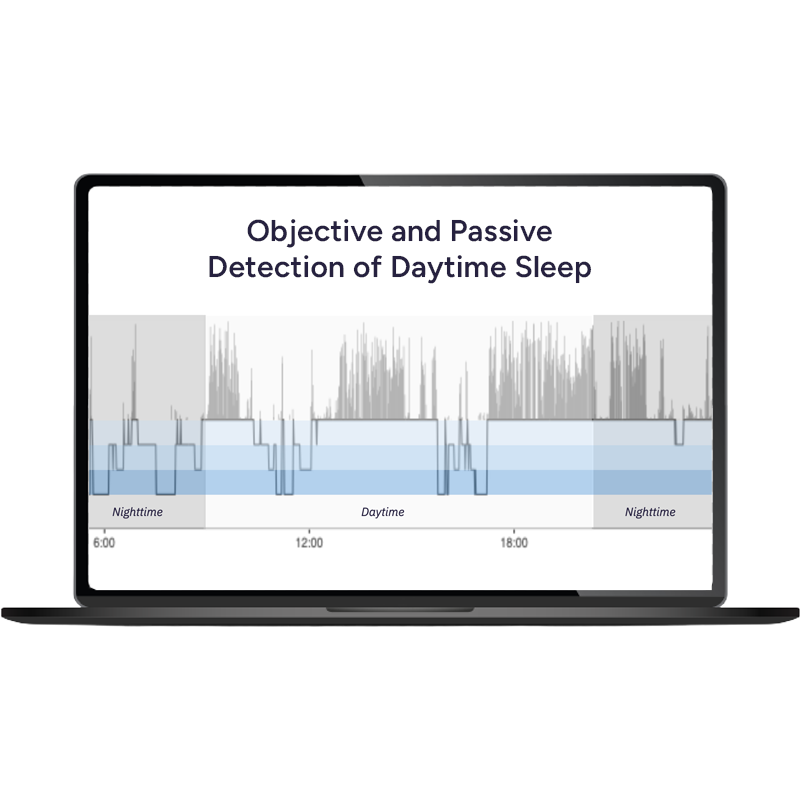
ametris_connect_daytime-sleep-graph_cutout

Daytime Sleepiness

Patients with sleep disorders such as narcolepsy and idiopathic hypersomnia (IH) experience excessive daytime sleepiness that significantly impacts their functioning and ability to perform everyday activities. Measuring daytime sleep using a wearable device provides critical insights into sleep/wake patterns that nighttime assessments may overlook. For individuals with sleep disorders such as narcolepsy, hypersomnia, or insomnia, the ability to continuously and objectively capture episodes of daytime sleep helps researchers better understand disease severity, treatment response, and the real-world impact of disrupted sleep regulation.

gfx2-2

Circadian Rhythms

Actigraphy provides an effective, noninvasive way to measure circadian rest–activity patterns and sleep-wake behavior in people with sleep disorders. In conditions like narcolepsy and REM sleep behavior disorder, actigraphy reveals disrupted sleep continuity, increased daytime napping, and irregular sleep–wake cycles. By continuously capturing activity data, actigraphy enables objective insights into circadian rhythm disruptions and helps differentiate central disorders of hypersomnolence.

Experience in Sleep Disorder Trials

13
trials
188
sites
15
countries
704
participants